

10 Days of Brahmotsavam: Events You Should Not Miss Before Karthigai Deepam Tiruvannamalai
Discover the 10-day Brahmotsavam leading to Karthigai Deepam at Tiruvannamalai. Key rituals, processions, and tips for planning your pilgrimage stay.
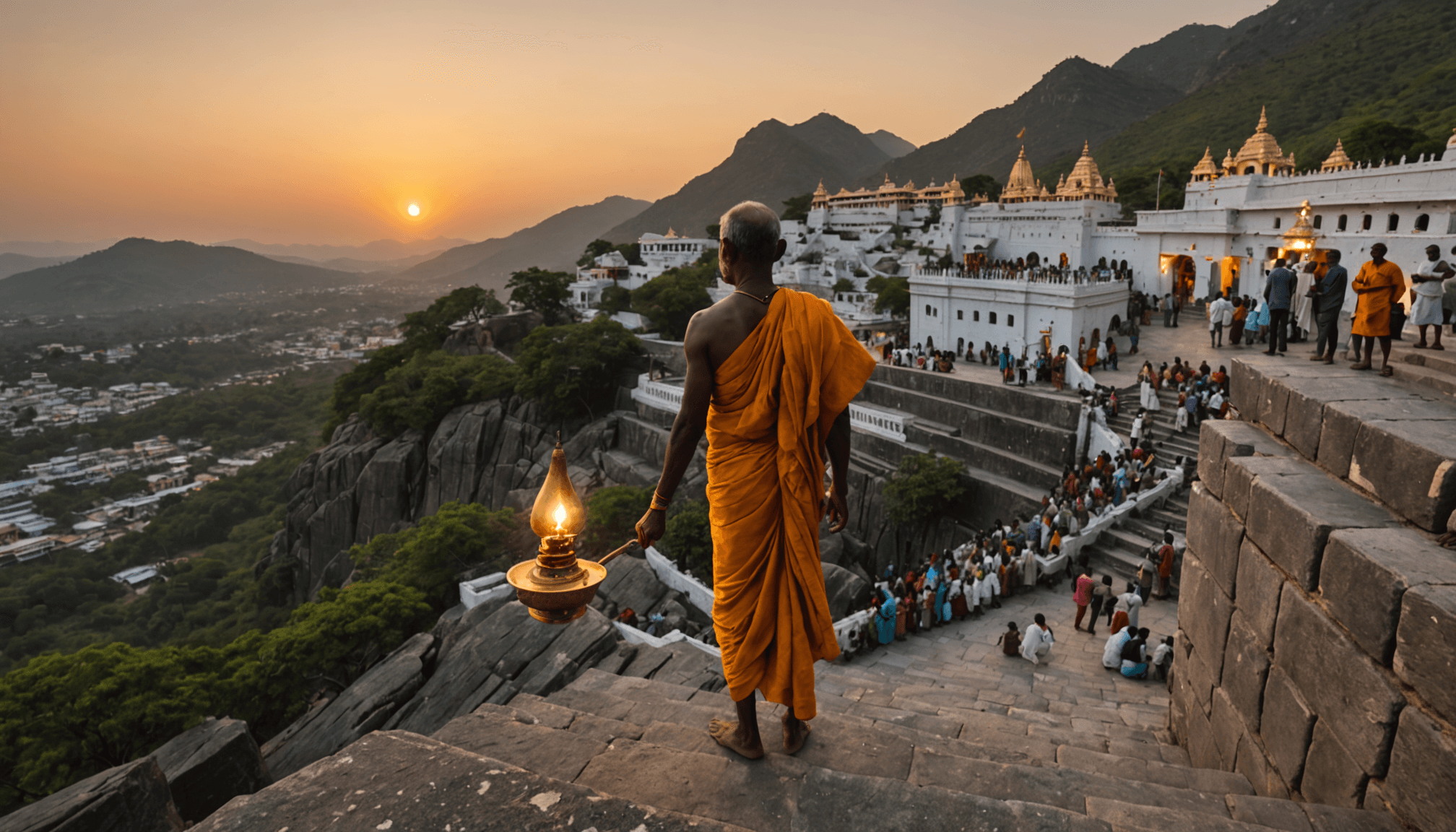
Every November, the ancient streets of Tiruvannamalai transform in a way that no photograph fully captures. Weeks before the beacon fire crowns Arunachala Hill on Karthigai Deepam night, the Arunachaleswarar Temple begins a ten-day countdown called Brahmotsavam — a festival within a festival that most visitors overlook entirely because they arrive only for the final flame.
If you are planning a pilgrimage to Tiruvannamalai for Karthigai Deepam 2026, understanding the Brahmotsavam calendar is the difference between witnessing one transcendent moment and living ten unforgettable days. Each morning and evening of this period carries its own ritual, its own procession, and its own emotional register — from the solemnity of the flag-hoisting on Day 1 to the thunder of the temple chariot on Day 9. This guide walks you through every event worth planning around, with practical advice on timing, crowd patterns, and how to base yourself comfortably for the entire run.
The Significance of Brahmotsavam at Arunachaleswarar Temple
Brahmotsavam — literally "the festival of Brahma" — is the grandest annual celebration at any Shaivite temple, and at Arunachaleswarar it carries additional weight because it culminates in Karthigai Deepam, the lighting of the sacred fire atop Arunachala. The ten days are not a preamble; they are integral to the spiritual arc of the festival. Each day, the presiding deity is carried through the temple streets on a different vahana (divine vehicle), allowing devotees who cannot enter the inner sanctum to receive darshan in the open air.
The rituals follow a sequence prescribed by the Agama shastra, and the temple's hereditary priests have observed this sequence without interruption for centuries. For a pilgrim, attending even three or four of these ten days deepens the experience of the final Deepam night in a way that a single-day visit simply cannot.
Day-by-Day: The 10 Events You Should Plan Around
Day 1 — Dwajaarohana (Flag Hoisting)
The festival formally opens with the hoisting of the temple flag on the towering flagpost inside the complex. This ritual signals to the entire region that Brahmotsavam has begun. The atmosphere is charged but relatively calm — a good day to arrive, complete your first Girivalam, and settle in before the crowds build.
Day 2 — Chandra Prabha Vahana (Moon-Chariot Procession)
The deity is carried on the Chandra Prabha vahana, a silver palanquin associated with lunar radiance. Evening processions on this day draw moderate crowds and offer a clear, unhurried view of the idol — one of the last evenings when you can stand close to the procession route without being pressed by the crowd.
Day 3 — Surya Prabha Vahana (Sun-Chariot Procession)
The Sun vahana procession is visually striking — the idol is adorned in gold-toned vestments and carried under a canopy of lights. From Day 3 onward, devotees begin arriving in larger numbers from Chennai, Bengaluru, Vellore, and Puducherry. If you are driving in, reach by early morning and park before 7 AM.
Day 4 — Muthu Pallakku (Pearl Palanquin)
One of the most intimate and visually delicate processions of the ten days. The pearl palanquin is ornate and slow-moving, and the accompanying Vedic chanting is particularly resonant in the early morning air. Experienced pilgrims often cite this as a personal favourite precisely because it draws fewer visitors than the chariot days.
Day 5 — Hanumantha Vahana
Lord Hanuman carries the deity on this evening, and the procession draws a devoted crowd of Hanuman bhaktas alongside the regular Shaivite pilgrims. The energy is celebratory and the procession route along the outer prakara (corridor) of the temple is worth walking in full.
Day 6 — Garuda Vahana (Eagle Vehicle)
Garuda Vahana is one of the most anticipated processions of the entire Brahmotsavam. The golden eagle vehicle is a masterpiece of temple craftsmanship, and the deity's appearance on it draws large crowds. Plan to be at the procession route at least 90 minutes early on this evening.
Day 7 — Rishabha Vahana (Bull Vehicle)
Nandi, the sacred bull and Shiva's vehicle, carries the deity on Day 7. This is considered especially auspicious for devotees seeking blessings for health and family wellbeing. The morning abhishegam on this day is also open for darshan and is worth attending before the evening procession.
Day 8 — Kalpa Vriksha Vahana (Wish-Fulfilling Tree)
The Kalpa Vriksha vahana is rare and symbolically rich — the deity is carried beneath a representation of the divine wish-fulfilling tree. Crowds are significant by Day 8, and the streets around the Raja Gopuram fill from mid-afternoon. Arrive before noon if you want a position near the main gate.
Day 9 — Ther (Temple Chariot Festival)
The Ther — the great wooden temple chariot — is pulled through the four Mada streets surrounding the temple by thousands of devotees. This is the most physically and emotionally overwhelming event of the ten days. The chariot is massive, ornate, and slow, and the collective pulling of the ropes by the crowd is an act of communal devotion unlike anything else in Tamil Nadu's festival calendar. Streets are closed to vehicles from early morning; plan to walk from your accommodation or from a parking point well outside the temple zone.
Day 10 — Karthigai Deepam (Maha Deepam)
The festival culminates in the lighting of the sacred beacon atop Arunachala Hill, visible across the entire region. The Bharani Deepam lit inside the temple before dawn and the Maha Deepam lit on the hill at dusk together form the spiritual climax of the entire Brahmotsavam arc. By this point, Tiruvannamalai hosts hundreds of thousands of pilgrims; the Girivalam path around the hill is walked through the night.
How to Move Around During Brahmotsavam
The practical reality of attending multiple days of Brahmotsavam is that vehicle access to the streets immediately around the temple becomes progressively restricted from Day 6 onward, and almost entirely closed on Days 9 and 10. The most workable strategy is to stay within walking distance of the temple complex — close enough to reach the procession route on foot, but far enough from the innermost streets to avoid being caught in crowd surges.
The Chennai–Bengaluru Ring Road (the Edapalayam stretch) sits approximately 2 km from the Arunachaleswarar Temple and the Raja Gopuram, giving pilgrims a clear, walkable corridor into the temple zone while keeping their vehicle safely parked. VSeven Hotels, located on this stretch of the Ring Road, offers free parking — a practical advantage that becomes significant when temple-area streets are closed to traffic for the chariot festival and the Deepam night.
For those arriving by train, the Tiruvannamalai Railway Station is 1.3 km from the property — close enough to walk with luggage on quieter days, or to reach by auto-rickshaw in minutes.
Planning Your Stay for the Full 10 Days
Most pilgrims who attend Brahmotsavam in full arrive by Day 5 or 6, which means accommodation fills quickly from Day 4 onward. If you intend to be present for the Garuda Vahana (Day 6), the Ther (Day 9), and Karthigai Deepam (Day 10), booking your room at least four to six weeks in advance is strongly advisable.
For families and couples attending multiple days, a room with a balcony offers a quiet retreat between processions — the Bella Mountain View with Balcony and the Bella Mountain View Twin Balcony are well suited to multi-night pilgrimage stays where you need both rest and a calm view to decompress after the intensity of the festival streets.
For longer stays or groups, the Bella Grand Suite offers additional space for families who prefer not to take multiple separate rooms.
The property's vegetarian restaurant is a practical asset during the festival period, when the streets around the temple are so crowded that finding a clean, calm meal becomes genuinely difficult.
What First-Time Brahmotsavam Visitors Often Get Wrong
The most common mistake is treating the ten days as interchangeable and planning to attend "whichever day is convenient." In practice, the Garuda Vahana (Day 6) and the Ther (Day 9) draw crowds that are qualitatively different from Days 2 and 3 — the streets are denser, the wait times are longer, and the emotional intensity is far higher. First-time visitors who arrive only for Karthigai Deepam and happen to catch the Ther by chance are often overwhelmed.
A better approach: attend Days 2 or 3 to orient yourself with the procession routes and the temple layout, take a morning walk on the Girivalam path on a quieter day, and then position yourself strategically for Days 6, 9, and 10. The early morning hours — before 7 AM — remain the most peaceful window for temple darshan throughout the ten days, even as the evenings grow increasingly crowded.
For a deeper understanding of Tiruvannamalai's sacred geography and the spiritual significance of Arunachala, the Arunachaleswarar Temple's Wikipedia entry provides useful historical context before your visit.
Conclusion
Brahmotsavam is not the run-up to Karthigai Deepam — it is the full experience of which Karthigai Deepam is the culmination. Each of the ten days offers something distinct: a different vahana, a different mood, a different density of crowd, and a different quality of devotion. Planning around even four or five of these events, rather than arriving only for the final night, transforms a pilgrimage into something genuinely immersive.
If you are travelling to Tiruvannamalai for Karthigai Deepam 2026, consider arriving by Day 5 or 6 to catch the most celebrated processions and secure your footing before the final two days draw the largest crowds. Explore our rooms and suites and book your stay directly to secure the best rates for the festival period.
Frequently asked questions
When does Brahmotsavam start before Karthigai Deepam at Tiruvannamalai?
Brahmotsavam begins ten days before Karthigai Deepam, with the Dwajaarohana (flag hoisting) on Day 1. The exact dates shift each year with the Tamil lunar calendar, so check the temple's official schedule for 2026 dates.
Which Brahmotsavam procession is the most crowded and hardest to attend?
The Ther (temple chariot) on Day 9 draws the largest crowd of the ten days. Streets around the temple are closed to vehicles from early morning, and positions along the Mada streets fill several hours before the chariot moves.
Can I attend multiple days of Brahmotsavam if I stay in Tiruvannamalai?
Staying for the full period is the best way to experience Brahmotsavam. Most pilgrims arrive by Day 5 or 6; booking accommodation at least four to six weeks in advance is recommended as rooms fill quickly from Day 4 onward.
Is free parking available near the temple during Brahmotsavam?
Parking immediately around the temple becomes restricted from Day 6 and is largely closed on Days 9 and 10. Staying on the Ring Road (about 2 km from the temple) with free hotel parking and walking in is the most practical approach.
What is the best time of day to visit the Arunachaleswarar Temple during Brahmotsavam?
Early morning — before 7 AM — offers the most peaceful darshan throughout the ten days. Evenings from Day 5 onward become progressively more crowded as processions draw larger numbers.
How far is VSeven Hotels from the Arunachaleswarar Temple?
The property is approximately 2 km from the Arunachaleswarar Temple and the Raja Gopuram, on the Chennai–Bengaluru Ring Road at Edapalayam — walkable distance during festival days when vehicle access near the temple is restricted.
Is vegetarian food easily available in Tiruvannamalai during the festival?
Tiruvannamalai is predominantly vegetarian, but during Brahmotsavam and Karthigai Deepam the streets around the temple become extremely crowded. Having a vegetarian restaurant at your accommodation makes mealtimes significantly easier.
Which vahana procession is considered the most auspicious during Brahmotsavam?
The Garuda Vahana (Day 6) and the Rishabha Vahana (Day 7) are widely regarded as the most spiritually significant processions. The Ther on Day 9 is the most visually spectacular and draws the largest crowd.